What does payload mean in logistics?
In logistics, payload is the weight of cargo that can be carried by a truck, trailer or container without exceeding the maximum permitted weight. It represents the available loading capacity after accounting for the empty weight of the transport equipment.
The maximum payload depends on several factors, including the vehicle type, equipment weight, legal weight restrictions and the characteristics of the cargo being transported.
How is payload calculated?
Payload is calculated by subtracting the empty weight, also known as tare weight, from the maximum permitted gross weight of a vehicle or transport unit.
A simple formula for calculating payload is:
Payload = Maximum permitted gross weight − Tare weight
However, the actual payload may be lower due to axle load restrictions, vehicle specifications or other legal requirements.
Example of a payload calculation
For example, a truck and trailer combination has a maximum permitted gross weight of 40,000 kg and an empty weight of 15,000 kg.
The maximum theoretical payload would be:
40,000 kg − 15,000 kg = 25,000 kg
This means the combination can carry up to 25,000 kg of cargo, provided that all other applicable weight and axle load restrictions are met.
What is the difference between payload and gross vehicle weight?
Payload and gross vehicle weight (GVW) are closely related, but refer to different measurements. While payload represents the weight of the cargo, gross vehicle weight includes the total weight of the loaded vehicle.
The table below explains the main differences between the terms used to determine transport.
Term | Definition | Example |
Payload | The maximum weight of cargo a vehicle can legally and safely carry. | 25,000 kg |
Tare weight | The empty weight of the vehicle and trailer combination, including relevant equipment and operating items. | 15,000 kg |
Gross vehicle weight (GVW) | The actual total weight of the vehicle and its load. | 38,000 kg when carrying 23,000 of cargo |
Maximum permitted gross weight | The maximum legally authorised weight of the fully loaded vehicle or combination. | 40,000 kg |
Understanding these differences is important for calculating loading capacity, preventing overloading and ensuring compliance with transport regulations.
Why is payload important in transport?
Payload directly influences how efficiently goods can be transported. By making effective use of the available loading capacity, logistics service providers can reduce the number of transport movements required and optimise transport costs.
A higher payload can allow more goods to be transported per journey, improving operational efficiency and potentially reducing CO₂ emissions per tonne of cargo.
At the same time, payload limits must be respected to ensure safe vehicle handling, prevent overloading and comply with applicable transport regulations.
Payload in bulk transport
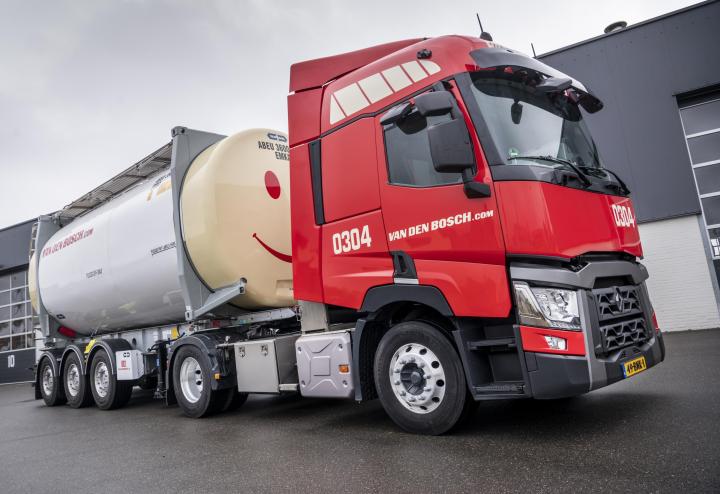
In bulk transport, payload is particularly important because large quantities of liquid or dry bulk goods are transported using specialised equipment, such as tank containers, silo containers and bulk trailers.
The available payload depends on the weight of the equipment, legal weight limits and product characteristics, such as density. For example, a high-density liquid may reach the maximum permitted payload before the tank container is completely filled, while a lower-density product may be limited by the available tank volume.
By selecting suitable equipment and optimising loading capacity, logistics service providers can transport bulk products efficiently while maintaining safety, product quality and compliance with weight regulations.