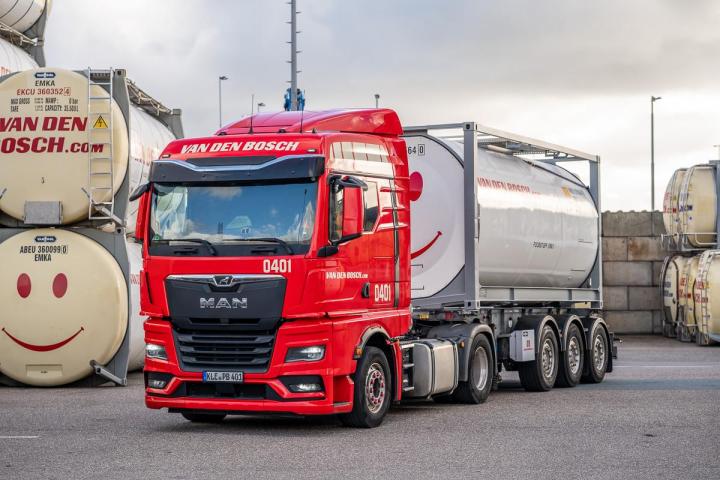
How does last mile delivery work?
Once the goods arrive at the distribution point, the final part of the journey is organised. In this phase, last mile delivery ensures the goods are moved to the end destination as efficiently and reliably as possible.
This stage often involves route planning, delivery time windows, driver availability, vehicle access and clear communication with the receiving party. In many cases, last mile delivery often requires flexibility because local traffic, waiting times and site restrictions can affect arrival times and unloading.
The importance of last mile delivery
Last mile delivery is important because it is often the most time-sensitive and visible part of the logistics process. It determines whether goods arrive at the agreed location, at the agreed time and under the correct delivery conditions. Poor execution can therefore lead to missed time windows, waiting costs, disrupted production or dissatisfied customers.
It is also often the only face-to-face interaction a customer has with a transport provider, making the driver and delivery experience an important part of the overall service.
The last mile in bulk transport
In bulk transport, last mile delivery requires careful coordination. Products may need to be delivered to production sites, storage facilities or customer locations with specific unloading procedures and safety standards.
For liquid and dry bulk goods, the final delivery stage must be aligned with equipment availability, product handling requirements, cleaning standards and site planning.
Last mile delivery in intermodal logistics
In intermodal logistics, last mile delivery often follows a longer journey by road, rail, sea or air. After the goods arrive at a terminal, the final part of the journey is often completed by road.
This makes last mile delivery an essential link between intermodal transport and the final destination. Accurate planning helps reduce waiting times, improve terminal efficiency and ensure a smooth handover between transport modes.