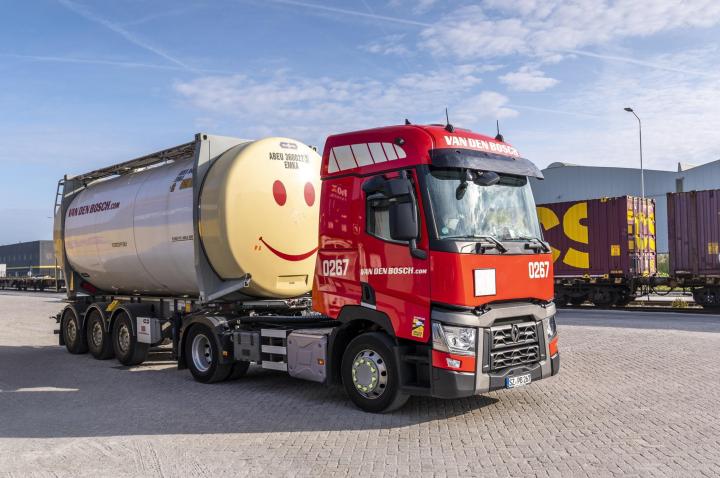
How does bulk transport work?
Bulk transport is based on moving large quantities of goods without individual packaging. Materials are loaded directly into specialized equipment and transported via an integrated logistics network.
Depending on the product, different handling methods are applied. Liquid bulk is typically pumped into tank containers or tankers, while dry bulk is loaded using gravity or pneumatic systems. Throughout the process, a strong focus is placed on safety, quality and efficiency, especially when handling sensitive or hazardous products such as chemicals, fuel or food-grade liquids.
How bulk transport moves: road, rail and sea
Bulk transport is organized through different transport modes within global freight and logistics networks, often combined in intermodal solutions. The choice of mode depends on distance, volume, product characteristics and supply chain requirements.
Road transport
Road transport offers maximum flexibility and is ideal for short- to medium-distance transport. Tank trucks and bulk trailers enable direct delivery between production locations, warehouses and end customers.
Rail transport
Rail transport is a reliable and cost-efficient solution for transporting large volumes over longer distances. It is widely used for bulk materials such as chemicals and agricultural products between industrial hubs and terminals.
Sea transport
Sea transport is essential for international bulk logistics. Bulk carriers and tankers are used to transport large quantities of dry and liquid cargo across global routes.
Types of bulk transportation
Bulk transport can be divided into different types based on the physical state of the goods. The two main categories are dry bulk and liquid bulk, each requiring specific equipment and handling expertise.
Dry bulk transportation
Dry bulk consists of solid materials transported in large quantities without packaging, such as grain, powders, minerals and plastic pellets. These materials are typically handled and stored in silos, bulk containers or specialized trailers.
Liquid bulk transportation
Liquid bulk includes products such as chemicals, fuels and food-grade liquids. These are transported in tank containers, tank trailers or tankers designed to meet strict safety, quality and hygiene standards.
3 advantages of bulk transport
Bulk transport offers clear advantages for companies handling large volumes within their supply chain. It supports efficient operations, reduces costs and contributes to more sustainable logistics.
1. Efficiency
Large volumes can be transported in a single movement, reducing handling steps and increasing operational efficiency.
2. Sustainability
By minimizing packaging and optimizing capacity, bulk transport can reduce environmental impact per unit, especially when using efficient modes such as rail, sea or inland waterways.
3. Economies of scale
Transporting goods in bulk reduces the cost per unit, making it a cost-effective solution for high-volume supply chains.