How does intermodal transport work?
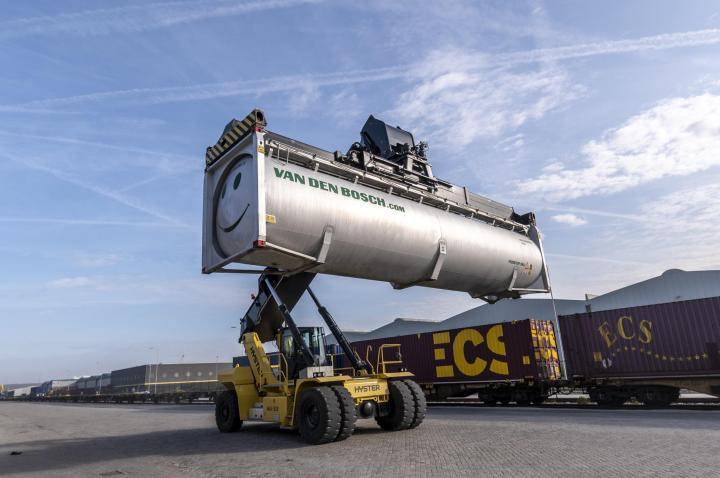
Intermodal transport is based on seamlessly integrating different transport modes into one coordinated logistics solution. Bulk products are loaded into a standardised unit, such as a tank container, silo container or silo trailer and transported across various modes without being transferred between them.
A typical intermodal journey may start with road transport from a production site to a terminal, followed by rail or sea transport over longer distances, and ending with road delivery to the final destination. This approach minimises handling, reduces risk of damage or contamination, and improves overall efficiency.
Combining strengths: road, rail and sea
Intermodal transport leverages the unique advantages of each transport mode to create an optimised supply chain.
Road transport
Road transport provides flexibility and accessibility. It is typically used for first-mile and last-mile delivery, connecting production sites, terminals and customers.
Rail transport
Rail transport is ideal for long-distance, high-volume shipments. It offers reliability, lower emissions and cost efficiency, making it a strong backbone within intermodal solutions.
Sea transport
Sea transport enables global reach and is highly efficient for international freight. It allows large volumes of goods to be transported across continents at competitive costs.
The difference between intermodal and multimodal transport
Although intermodal transport and multimodal transport are often used interchangeably, they differ in both operational structure and responsibility.
In intermodal transport, the cargo remains in the same loading unit, such as a container or trailer, throughout the entire journey, even though multiple carriers may be involved under separate agreements.
In multimodal transport, goods are transported using different modes under a single contract and a single responsible logistics provider, regardless of whether the loading unit changes.
Why choose intermodal transport?
Intermodal transport offers a strategic advantage for companies looking to optimise their supply chains while maintaining high standards of safety and sustainability.
Efficiency and reliability
By reducing the number of shipments, intermodal transport lowers the risk of delays, damage and product loss, ensuring a more reliable flow of goods.
Sustainability
Using rail and sea for the majority of the journey significantly reduces CO₂ emissions compared to road-only transport, supporting more sustainable logistics operations.
Cost optimisation
Combining different modes allows businesses to balance cost and performance, especially over long distances where rail and sea provide economic benefits.
Safety and quality
Keeping goods in the same loading unit throughout the journey enhances safety, particularly for sensitive products such as chemicals or food-grade liquids.
Intermodal transport in practice
Intermodal transport is widely used across industries that require efficient and large-scale logistics solutions. By integrating terminals, equipment and digital planning systems, intermodal networks create a smooth and controlled flow of goods across regions and continents.