What does HVO stand for?
HVO stands for Hydrotreated Vegetable Oil. The term refers to the production process in which natural oils and fats are treated with hydrogen. This process removes oxygen and impurities, resulting in a clean, stable and high-performance fuel that closely resembles fossil diesel in its chemical structure.
What is HVO made from?
HVO is produced from renewable raw materials, with sustainability depending on the origin and certification of the feedstocks. These include used cooking oil, animal fats, vegetable oils and other residue streams from the agricultural and food industries.
When produced from waste-based feedstocks, HVO can contribute to a circular economy and reduce reliance on fossil resources, while maintaining consistent fuel quality.
HVO fuel blends
HVO is available in different blends, depending on the proportion of renewable content mixed with conventional diesel.
HVO100
HVO100 is pure Hydrotreated Vegetable Oil, consisting entirely of renewable fuel. It offers a high potential reduction in lifecycle CO₂ emissions and can be used as a direct replacement for fossil diesel in many engines.
HVO30
HVO30 is a blend consisting of 30% HVO and 70% conventional diesel. It provides a step towards more sustainable fuel use, combining emission reduction with broad compatibility across existing fleets.
HVO used in the bulk transport industry
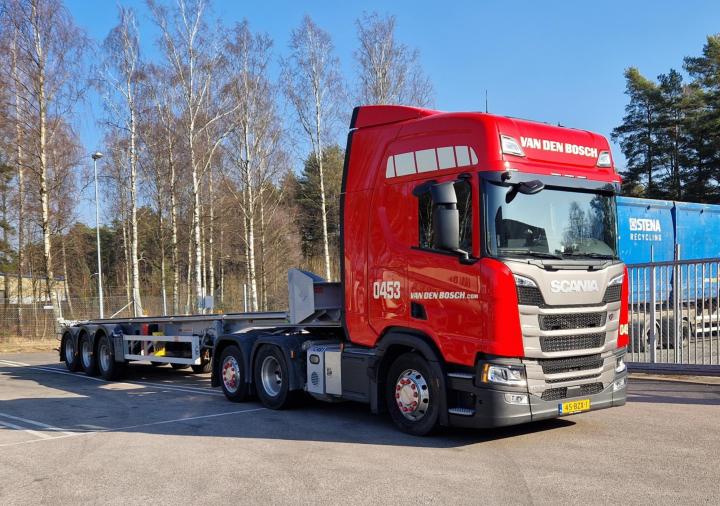
At Van den Bosch, HVO100 is applied daily as a direct replacement for fossil diesel within our operations, without requiring engine modifications. In close collaboration with our customers, we invest in sustainable kilometres by using renewable fuels such as HVO100 to reduce lifecycle CO₂ emissions across the supply chain, while maintaining the same level of operational reliability.
By combining HVO with efficient intermodal solutions, we create a scalable approach to reducing emissions, where sustainability, efficiency and performance go hand in hand.