Why is ETA important in logistics?
ETA helps logistics service providers and customers plan more accurately. A reliable ETA makes it easier to organise loading and unloading operations, manage delivery windows and communicate expected arrival times to all parties involved.
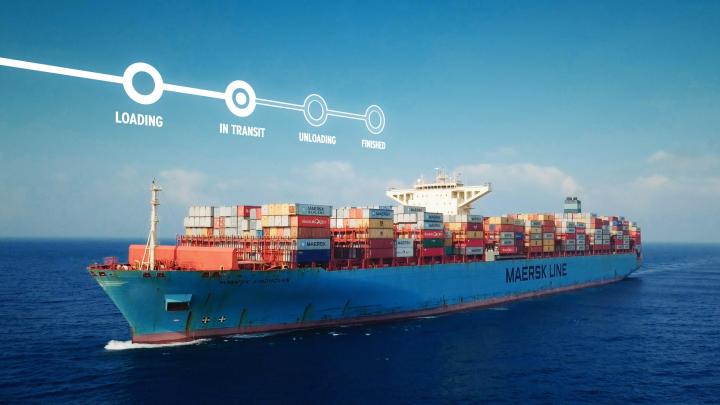
ETA is especially important in intermodal logistics because transport operations depend on the coordination of multiple transport modes, terminals and transfer points. Accurate arrival times help ensure smooth handovers between road, rail and sea transport, as well as reducing waiting times at terminals.
How is the Estimated Time of Arrival calculated?
ETA is calculated based on the current position of the shipment, planned route, remaining distance, traffic conditions, driving time regulations, terminal planning and expected waiting times.
A simple formula for calculating ETA is:
ETA = Current time + (Remaining distance ÷ Average speed)
A more advanced formula can take additional factors into account:
ETA = Current time + (Remaining distance ÷ Adjusted average speed) + Expected delays + Planned stop time.
Because transport conditions can change during the journey, ETA is not always fixed. It will be updated when delays occur, routes change, traffic conditions vary or new planning information becomes available.
ETA calculation example
For example, if a truck is 200 kilometres away from its destination and is expected to travel at an average speed of 80 km/h, the initial ETA would be approximately 2.5 hours. However, if the driver encounters traffic congestion or needs to take a break, the ETA will be adjusted accordingly.
The devices that are used to calculate ETA
To calculate and update ETA accurately, logistics service providers use a combination of devices, systems and data sources. Common sources used for ETA calculations include:
- GPS tracking devices, which provide the real-time location of a vehicle, container or shipment.
- Telematics systems, which collect vehicle data such as speed, mileage, route progress and driving behaviour.
- Tachographs, which record driving time, breaks and rest periods, helping planners understand driver availability.
- On-board computers, which connect vehicle, route and order data for day-to-day transport planning.
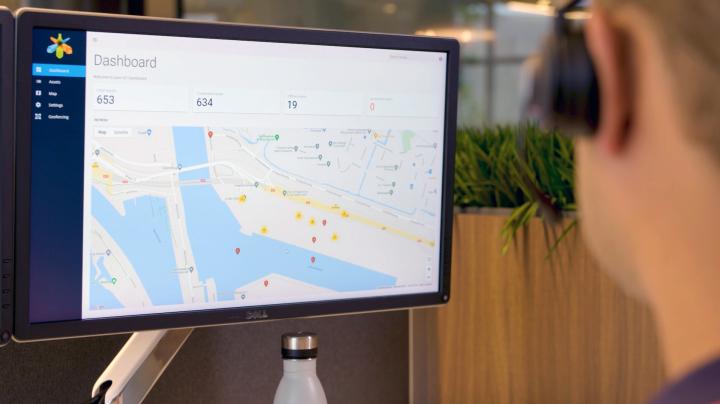
- Transport Management Systems (TMS), which combine tracking data, planning information and shipment details to calculate and update ETA.
- Mobile driver applications, which allow drivers to share status updates, report delays and confirm arrivals or departures.
By combining these data sources, logistics service providers can continuously update ETA and ensure that both the transport company and the customer are informed about the expected arrival time.
Smarter devices for more accurate ETA calculations
As logistics operations become more data-driven, the devices used to calculate ETA are becoming smarter and more connected, combining real-time location data with information from vehicles, loading units, sensors and planning systems to improve accuracy and enable continuous updates throughout the journey, supporting better planning, greater transparency and more reliable communication between transport companies, customers and supply chain partners.
Smart loading units and sensor data
The growth of intermodal transport means that not only trucks, but also containers are increasingly equipped with smart sensors. These sensors provide real-time information about the location of the loading unit and can also share additional data, such as product temperature or outside temperature.
By enriching GPS data with sensor information, logistics service providers can improve planning accuracy, product quality monitoring and supply chain visibility.