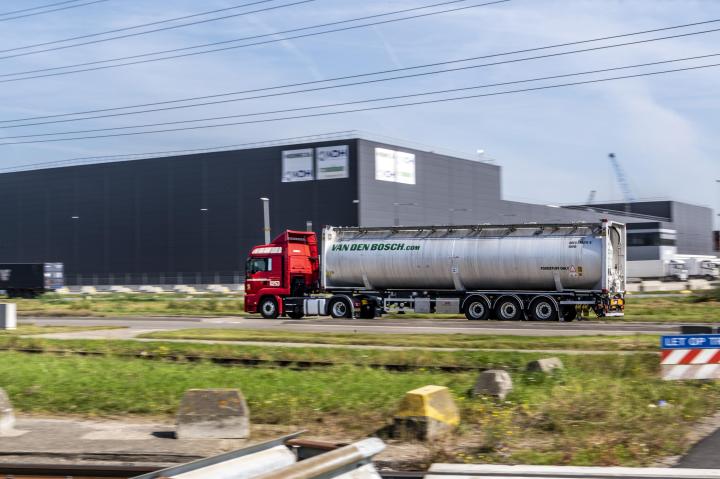
What is FEU in logistics?
In logistics, FEU is used to measure container capacity in relation to 40 foot containers. It helps logistics providers, carriers and terminals compare cargo volumes and available transport capacity in a standardised way.
For example, if a vessel carries 500 FEU, this equals the capacity of 500 standard 40 foot containers, or 1,000 TEU, which is equivalent to 1,000 20 foot containers.
Why Forty-foot Equivalent Unit matters in transport
FEU is an important measurement in international logistics because it creates a common standard across the supply chain. It is used to compare container and transit capacity across shipping lines, vessels, ports, terminals and intermodal operations.
Standardised containers allow trucks, trains and ships to move the same cargo unit without unpacking the goods. FEU provides a common way to measure and compare that container capacity, particularly for 40 foot containers.
FEU is also used in capacity planning and performance reporting. Ports, terminals and container ships use FEU to indicate how many 40 foot containers they can handle or carry.
FEU in intermodal logistics
In intermodal logistics, FEU is used to plan and measure container capacity across different transport modes, such as sea, rail and road. Because a 40 foot container can move between these modes without handling the cargo itself, FEU supports efficient planning and a more reliable flow of goods through the supply chain.
Also read: What is a TEU?
A 20 foot container is also commonly used in bulk logistics. To learn more about how this unit is measured and used, read our article about Twenty-foot Equivalent Units (TEU).