What does ADR stand for?
ADR originally comes from the French name Accord européen relatif au transport international des marchandises Dangereuses par Route. The official English name is Agreement concerning the International Carriage of Dangerous Goods by Road.
In the Netherlands, national compliance is managed via the VLG (Vervoer over Land van Gevaarlijke goederen), which implements the ADR rules into domestic law.
When does ADR apply?
ADR applies to goods that are classified as dangerous for transport by road. According to the agreement, dangerous goods are substances and articles whose international carriage by road is prohibited or only permitted under certain conditions.
These conditions depend on the type of goods being transported and the risks associated with them. ADR therefore determines under which circumstances dangerous goods may be transported safely and what requirements must be met.
Examples of when ADR applies
ADR applies, for example, when transporting flammable liquids, such as certain fuels or solvents. These substances fall within ADR because they can pose a fire or explosion risk during transport.
Another example is the transport of corrosive substances, such as certain acids or chemicals. These products require specific handling, labelling and transport conditions because they can cause serious damage if they leak or come into contact with people or materials.
What are the requirements for ADR transport?
ADR sets requirements for both the dangerous goods themselves and the load units and vehicles used to transport them.
For the goods, the rules include conditions relating to aspects such as transport, packaging and labelling. For vehicles, ADR includes requirements concerning their construction, equipment and operation.
In practice, ADR transport can therefore involve requirements relating to:
- classification and identification of dangerous goods
- packaging and transport
- trucks, trailers and containers
- labels and markings
- transport documentation
- written instructions
- driver training and certification
- vehicle equipment
- vehicle inspection
The exact requirements depend on the type and quantity of dangerous goods being transported.
What is an ADR certificate and how do you obtain one?
An ADR certificate is a qualification that shows a driver has been trained to transport dangerous goods by road safely and in accordance with ADR regulations. The certificate specifies which types of dangerous goods and transport the driver is qualified to handle.
To obtain an ADR certificate, a driver must complete an approved training course and pass the required examinations. The training covers subjects such as the properties and risks of dangerous substances, safety procedures, fire prevention, legislation and the responsibilities of the driver. Depending on the type of transport, additional training may be required, for example for transporting dangerous goods in tanks.
ADR at Van den Bosch
At Van den Bosch, drivers involved in ADR transport receive specialised training in these areas in our own Van den Bosch Academy.
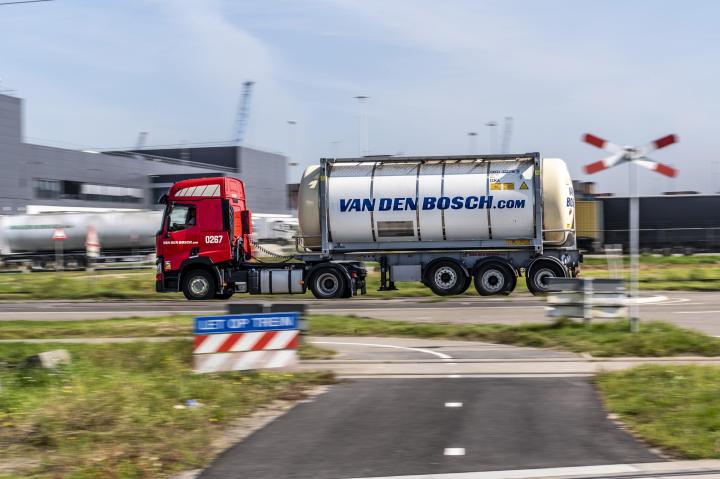
Our loading units (tank containers, silo containers, tank trailers and silo trailers) also comply with specific ADR regulations, depending on the bulk goods being transported. Furthermore, our trucks also meet additional ADR requirements. These include safety equipment, fire-extinguishing equipment, warning signs, documentation and, in some cases, specific technical vehicle features. In short: ADR regulations cover the entire bulk transport process, encompassing the load, the loading unit, the vehicle and the driver.