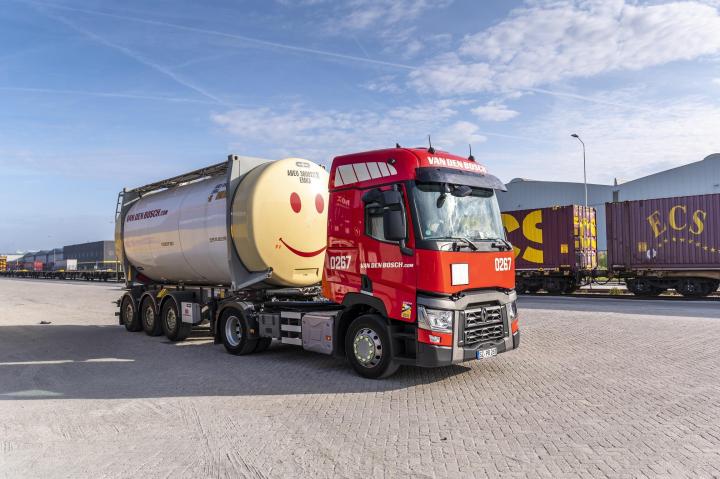
How does multimodal transport work?
Multimodal transport combines several modes of transport within one journey from origin to destination. A shipment may, for example, start by truck, continue by train or vessel and complete the final part of the journey by road.
During the journey, the goods may remain in the same loading unit, but they can also be transferred from one loading unit to another when changing transport modes. This distinguishes multimodal transport from intermodal transport, where the same loading unit is used throughout the entire journey.
Each mode of transport is used where it offers the most practical or efficient solution. Road transport provides flexibility for collection and final delivery, while rail and water transport can be efficient for moving larger volumes over longer distances.
The different stages must be carefully coordinated to ensure that goods move smoothly from one mode of transport to another. Scheduling and communication therefore play an important role in multimodal transport.
Which modalities are used in multimodal transport?
Different modalities can be used depending on the route, type of cargo and logistics requirements. Common modes of transport include:
Road transport
Road transport is commonly used for the first and final part of a multimodal journey. Trucks provide the flexibility needed to collect goods from the loading location and deliver them directly to their destination.
Rail transport
Rail transport is well suited to moving larger volumes over longer distances. It can provide an efficient alternative to long-distance road transport and is often combined with trucks for the first and last part of the journey.
Inland shipping
Inland shipping uses rivers and canals to transport goods between inland terminals and logistics hubs. It is particularly suitable for moving larger volumes over longer distances where a suitable inland waterway network is available.
Short sea shipping
Short sea shipping transports goods by sea between ports within the same region, for example between European ports. It can replace part of a long road journey and connect different countries within a multimodal transport network.
Deep sea shipping
Deep sea shipping is used for long-distance transport between continents. Within a multimodal journey, ocean transport can be combined with road, rail or inland shipping to move goods between their origin and final destination.
What is the difference between multimodal and intermodal transport?
The main difference between multimodal and intermodal transport is whether the same loading unit is used throughout the journey.
Intermodal transport
In intermodal transport, the same loading unit is retained throughout the entire journey. The loading unit moves from one mode of transport to another, for example from truck to train or vessel, without the goods themselves being reloaded.
Multimodal transport
Multimodal transport also involves several modes of transport within a single journey. However, the same loading unit does not necessarily have to be retained. The goods may therefore be transferred to another loading unit during the journey.
This means that intermodal transport can be seen as a specific form of multimodal transport: several transport modes are used, while the goods remain in the same loading unit throughout the journey.
How do the contracts differ?
In multimodal transport, there is often one carrier or logistics service provider responsible for the entire transport journey. The customer then has one contractual partner for the complete journey. In intermodal transport, several carriers may be involved in different stages of the journey. However, this is not a defining characteristic of intermodal transport. The main distinction is that the same loading unit is used throughout the journey without reloading the goods themselves.
Van den Bosch and intermodal transport
Van den Bosch specialises in providing intermodal bulk transport solutions. By combining road, rail and water transport while keeping the goods in the same loading unit, we create efficient and sustainable transport solutions.