Partner logins

Employee logins

Game Changer magazine

The journey of PVC powder


Polyvinyl chloride (PVC) is a crucial material in many industries including healthcare, packaging and the automotive sector. Visit any construction site and you will see how indispensable it is there too. But how is it produced? And how does PVC get from A to B? It’s quite a journey…

“The PVC powder we produce all goes to the construction industry,” says Linda Koops, Logistics Manager Europe for the Japanese company Shin-Etsu, the world’s largest PVC manufacturer. “The vast majority is used in window profiles and pipes. Our customers also use it to make cables, roof and floor panels, and many other products.”

Intermodal journey

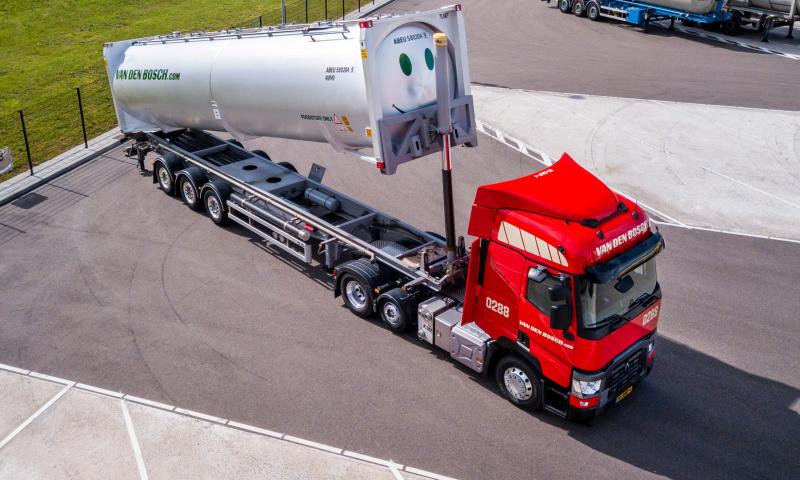
Van den Bosch transports PVC powder mainly in cylindrical 40ft pressurised silo containers. “These are suitable for road, rail or water transport,” explains Marieke van Schijndel, commercial manager. “Once the initial load has been transported to a port or rail terminal, the containers make their journey largely unmanned. At the destination port or terminal, a driver – either one of ours or a local partner’s – will take the container to the final recipient.”

Safety is paramount

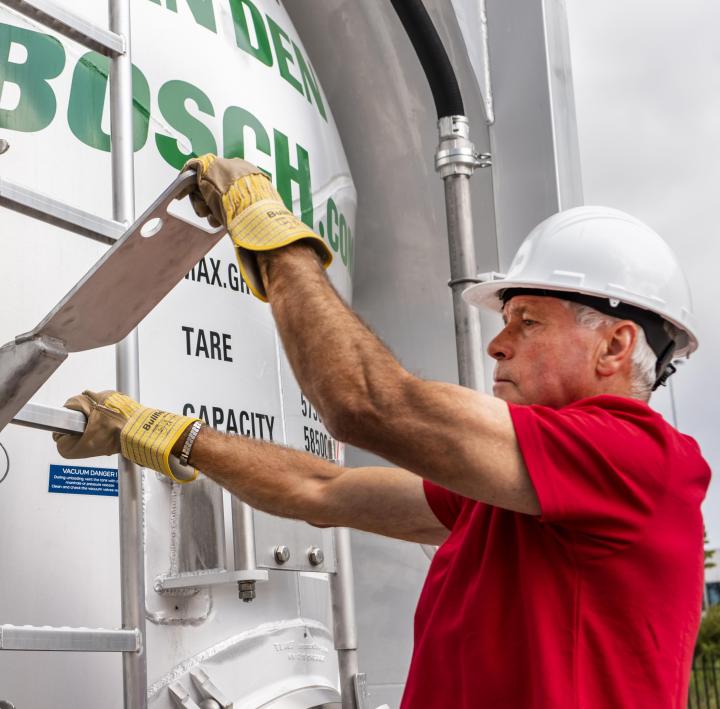
“We unload the container directly into the recipient’s storage silo using compressed air,” continues Van Schijndel. “It’s done very cautiously, and safety is top priority. We strictly adhere to Operation Clean Sweep guidance – an international initiative that aims to prevent plastics from industrial processes entering the environment. Our loading units are specially designed for transporting chemical raw materials, and we specifically train our drivers at our in-house training centre for this bulk logistics specialty. That goes for our transport partners too who also undertake intensive training to guarantee quality and safety. In the unlikely event of an accident occurring, all our people know exactly what to do.”
More sustainable

Using 40ft pressurised silo containers isn’t just about safety but sustainability too. Our containers serve as temporary packaging for the bulk product, eliminating the need for extra materials such as liners. Intermodal use also results in more favourable payloads. Van Schijndel: “The total weight for intermodal models is 44 tonnes compared to 40 tonnes for regular international road transport. That makes our pressurised containers the most sustainable transport option for PVC powder.”

Going with the flow

Bulkio, the digital platform that connects supply and demand in the bulk transport market, gives Van den Bosch a distinct advantage in today’s challenging arena. Van Schijndel: “Supply and demand for PVC fluctuates a lot due to economic and social pressures. As a carrier, we must be flexible and ride the ups and downs. We do that through our own intermodal network, but we're also looking beyond our own fleet. Through Bulkio, we offer our customers forwarding solutions that use the capacity of our transport partners. We have a well-balanced network and can react quickly – especially when time is of the essence. That adds significant value to our offering.”

The full article, ‘The Journey of PVC powder’, appeared in our Game Changer magazine. Read the entire article here.